
- Notes supply outlook is set to improve further
- Says flight disruptions ease to 35% from 60%
Sri Lanka’s aviation sector has stabilised its fuel supply chain with sufficient jet fuel stocks to last nearly two months, even as flight operations to the Middle East gradually return to normal following recent disruptions.
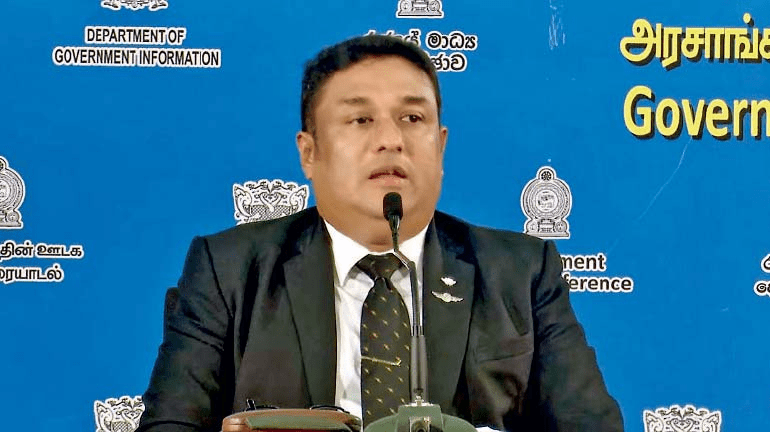
Addressing the media, Civil Aviation Authority of Sri Lanka (CAASL) Director General Capt. Daminda Rambukwella said fuel availability, which had emerged as a key concern amid the Middle East crisis, now appears firmly under control.
“The Ceylon Petroleum Corporation (CPC) currently holds around 34,000 tons of Jet A-1 fuel, supplemented by 15,000 tons from local refinery output. In addition, orders have already been placed for a further 43,000 tons,” he said.
With average daily consumption estimated at 1,600 tons, Rambukwella said these combined stocks provide a buffer stock for 57 days or nearly two months, offering a crucial safeguard for uninterrupted international flight operations.
He also said the supply outlook is set to improve further in the coming days, with a 35,000 ton shipment nearing arrival, followed by an additional 8,000 tons expected by / April . “These incoming consignments are expected to reinforce reserves and provide additional flexibility in managing demand,” he added.
In addition, he confirmed that aviation fuel stocks for domestic operations remain stable. “Avgas supplies, used for smaller training aircraft, stand at 271 barrels against a daily requirement of just three barrels, enough to sustain operations for 107 days. The daily usage is only three barrels,” he noted.
The Director General also affirmed the availability of fuel extends across all key aviation hubs, including Bandaranaike International Airport (BIA), Mattala Rajapaksa International Airport (MRIA), Jaffna International Airport (JIA), and Colombo International Airport (Ratmalana Airport).
“The initial shock to flight schedules triggered by escalating tensions in the Middle East had affected between 50% and 60% of operations. However, this impact has now eased significantly, with disruptions reduced to around 30% to 35%,” Rambukwella said.
He noted that services to most Middle Eastern destinations are steadily resuming, except for few, signalling a cautious recovery in one of Sri Lanka’s most critical aviation corridors. “Turkish Airlines has expanded frequencies and so has SriLankan Airlines,” he added.
When asked if the air fares have increased he noted that international prices have increased considering the insurance premiums by respective airlines. However, he said domestic prices have not been increased yet, but the discussions are ongoing.
Source: Daily FT
 Asian - Dispatch
Leave a comment